








‘On the Science Trail in Florence, discovering the wondrous worlds of the Galileo Museum Tour’
The Renaissance did not only reinvent painting, sculpture, and literature. It also unleashed a new hunger to understand how nature works: an appetite for observation, measurement, and proof that would slowly rewrite humanity’s picture of the universe. Nowhere is that story told more vividly than in Florence, and no figure embodies it better than Galileo Galilei.
Galileo, the Medici, and a Universe Rewritten
Often described as the father of modern science, Galileo built his career on a radical idea: that nature could be questioned directly, through instruments, experiments, and mathematics, rather than through inherited authority alone. His telescope turned that idea into spectacle. In 1610 he observed the moons of Jupiter and named them the Medicean Stars in honour of his patron, Cosimo II de’ Medici, a gesture that secured him a place at the Florentine court. It was a world in which astronomy and astrology, chemistry and alchemy still overlapped, and Galileo himself prepared horoscopes for the Medici. Yet his insistence on evidence over tradition, and his defence of the Copernican view of a sun-centred cosmos, led him into the conflict with the Church that ended in his trial and in a long house arrest near Florence, where he died in 1642.
From Galileo’s Method to the Accademia del Cimento
His legacy did not die with him. In 1657, under the patronage of the Medici, Florence founded the Accademia del Cimento, the “Academy of Experiment,” whose members included disciples of Galileo and whose motto, provando e riprovando (“trying and trying again”), distilled his method into three words. Across the following decades, and well into the Age of Enlightenment, the city remained a laboratory where physicians, botanists, and natural philosophers tested, refined, and passed on the ideas he had set in motion.
Inside the Museo Galileo
Today that story is preserved in the Museo Galileo, housed in the medieval Palazzo Castellani beside the Uffizi and often described as the Uffizi of science. Its collections draw on the extraordinary scientific passions of the Medici and, later, the Lorraine grand dukes, and the highlights are astonishing in their immediacy: the only two telescopes built by Galileo known to survive, together with the cracked objective lens through which he first observed Jupiter’s moons, preserved in an ornate ebony and ivory frame commissioned by the Medici in 1677.
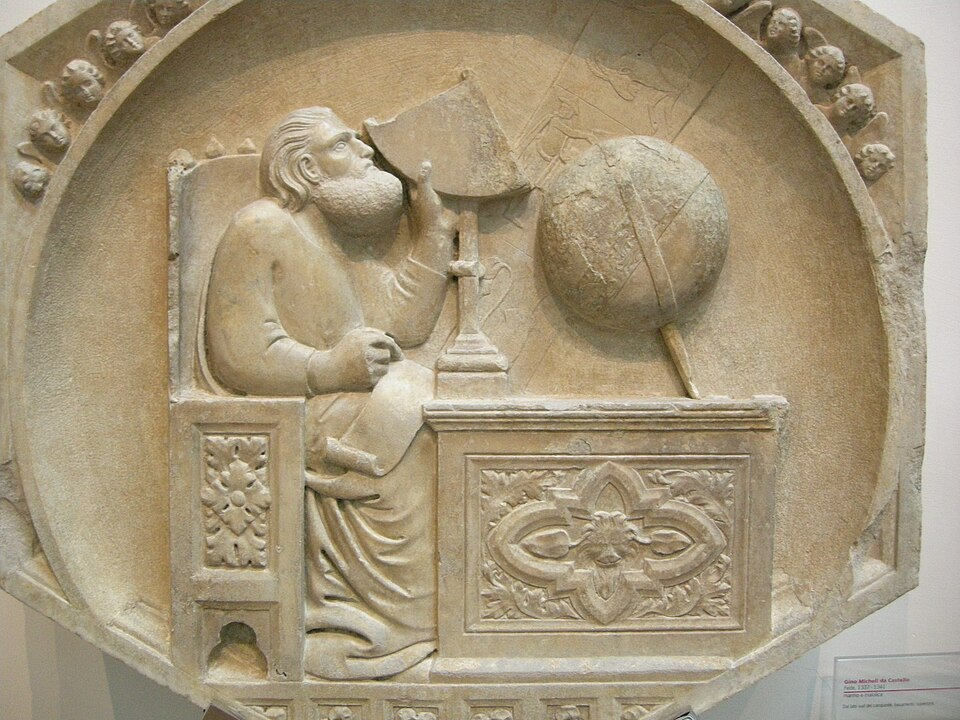
Around them unfolds a world where science and beauty were never separate. Antonio Santucci’s monumental armillary sphere of 1593 turns the heavens into sculpture; refined sundials, globes, and optical tricks show how instruments were designed to dazzle as much as to measure; and an elegant sixteenth-century astrolabe, attributed to Egnazio Danti and known as Galileo’s astrolabe, recalls the astronomical calculations carried out in his time. Then there is the relic that never fails to astonish visitors: Galileo’s middle finger, removed from his remains in 1737 when his body was moved to its monumental tomb in Santa Croce, and displayed ever since in a small glass reliquary like a saint’s.
About the Science Trail and Museo Galileo Tour
This guided experience is designed to engage every sense and to let history and knowledge unfold in harmony with what you see. It suits families and curious individuals of all ages, and it approaches the history of science from many angles, so that everyone, whether drawn to astronomy, medicine, alchemy, or simply a good story, finds a thread to follow. It is a journey that begins with science’s alchemical roots and travels through to the consolidated discoveries of modern science
What you’ll do
- Visit the Museo Galileo, Florence’s History of Science Museum, often described as the Uffizi of science: explore the Medici collection of astronomical instruments and stand before the only two surviving telescopes built by Galileo.
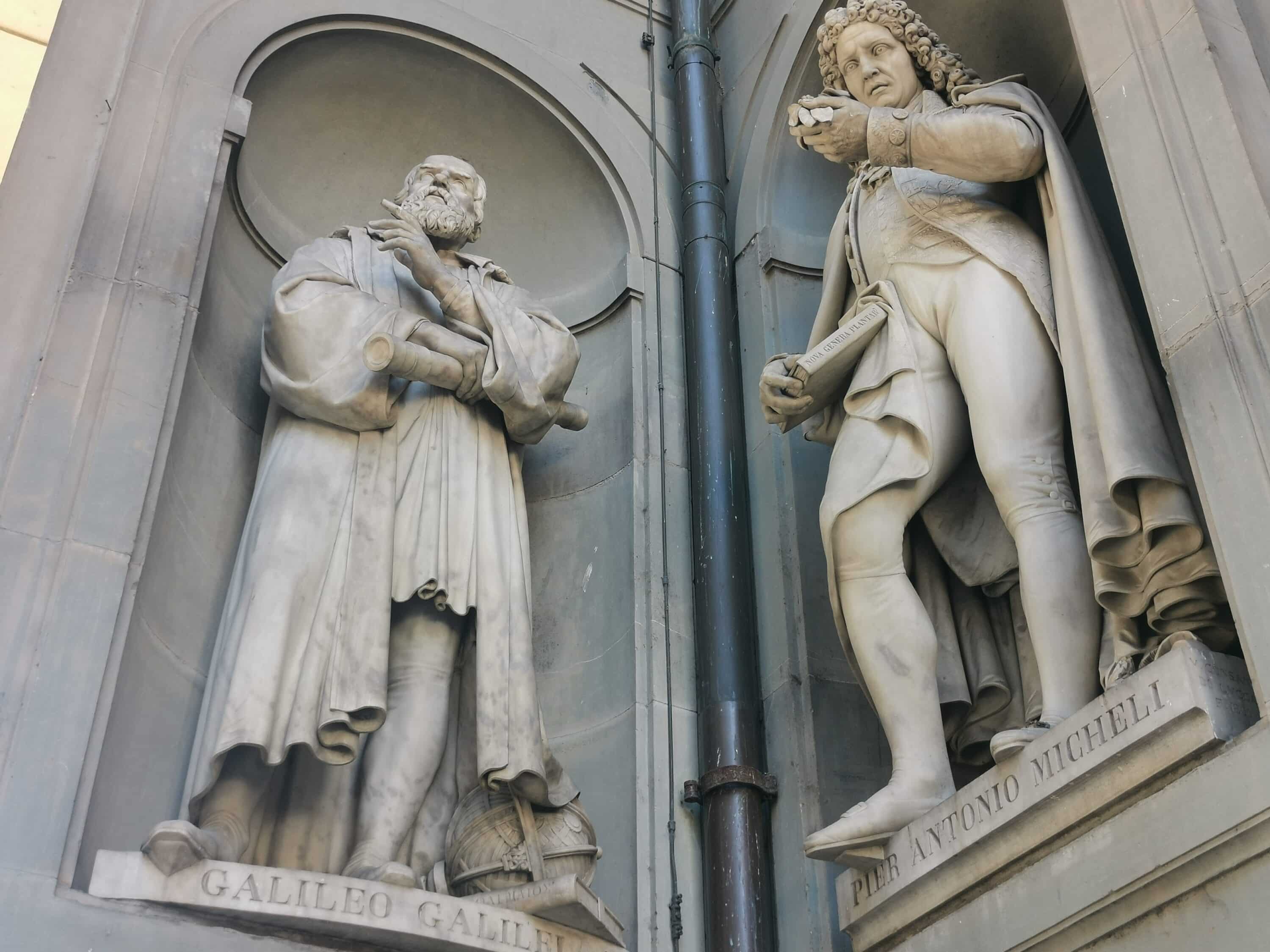
- Walk through the city in the footsteps of Florence’s great men of science, following the monuments and sculptures that recall their discoveries, then admire the astronomical instruments designed for the marble facade of Santa Maria Novella.
- End at the Officina Profumo-Farmaceutica di Santa Maria Novella, one of the oldest pharmacies in the world, to discover its history, its alchemical recipes, and its historic fragrances.