
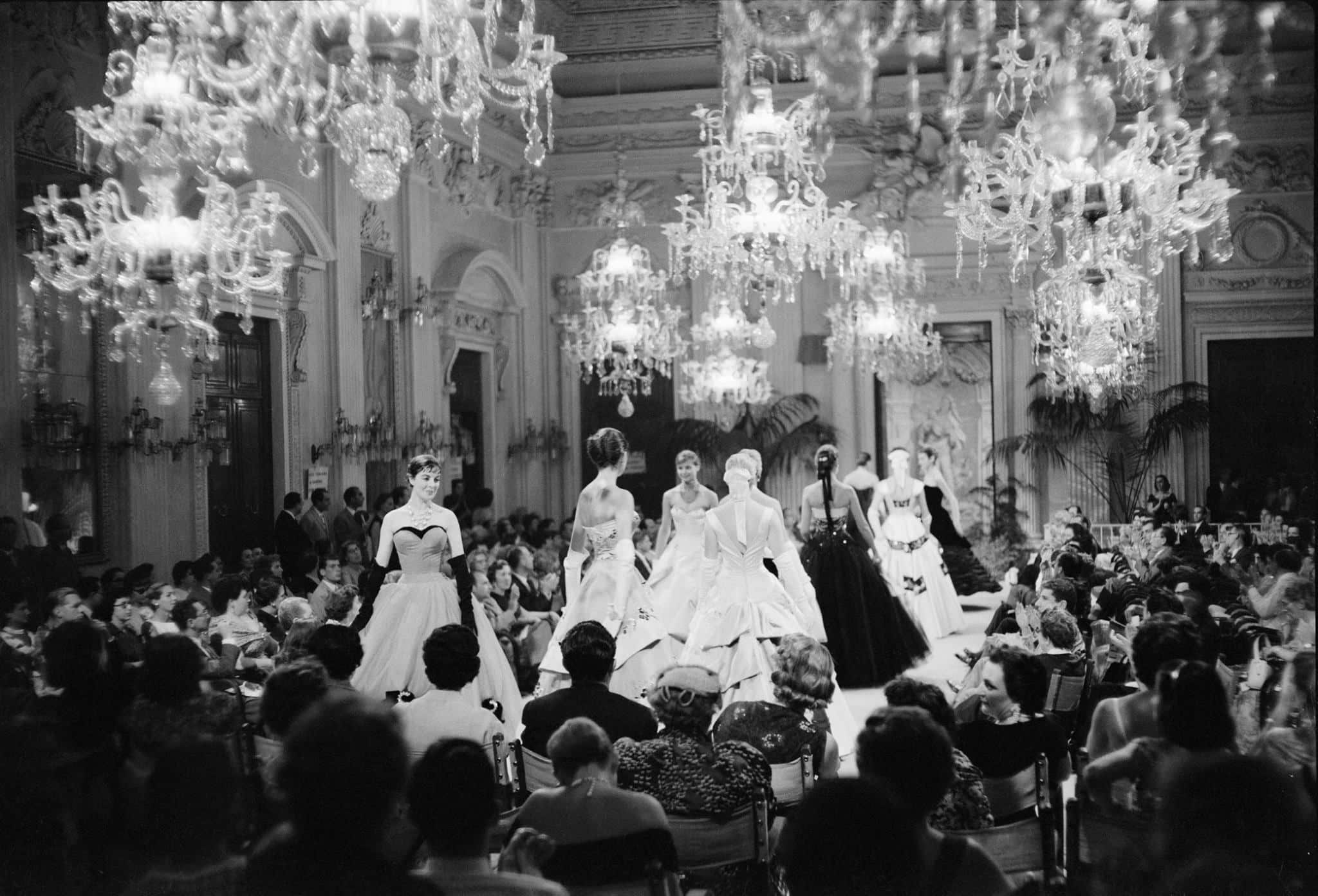
Florence, with its rich artistic heritage, has long been a beacon of creativity and culture. After World War II, the city became the epicentre of a fashion movement that would redefine an entire industry — not through a single grand event, but through one businessman’s persistence after being turned down in New York.
The Post-War Context
After the war, Italy found itself in a state of economic and social turmoil. Its fashion industry, in particular, had no international identity of its own. Italian tailors made practical, Mediterranean-inflected clothes for Italian women, but nothing that could compete on the world stage with Paris, which remained the undisputed capital of style — elaborate, prestigious, and expensive.
Amid this uncertainty, one Florentine businessman saw an opportunity others had missed.
A Refusal in New York, and a Ballroom in Florence
Giovanni Battista Giorgini — “Bista” to his friends, a Tuscan trade agent with decades of experience exporting Italian goods to the United States — had noticed something American buyers hadn’t yet articulated themselves: a growing appetite for clothes that were simpler, more wearable, and less expensive than Parisian haute couture. His first plan was to organise a showcase of Italian fashion in New York, and he approached the department store B. Altman & Company to sponsor it. They said no.
Giorgini did not abandon the idea. He decided to bring the buyers to Florence instead. On 12 February 1951, he invited a handful of American department store representatives — six in total, including buyers from Bergdorf Goodman, I. Magnin, and B. Altman itself — not to a grand public palace, but to his own home: Villa Torrigiani, his private residence on Via dei Serragli in the Oltrarno. The evening was framed almost as a social occasion rather than a trade event; eighteen outfits from ten Italian fashion houses, including a young designer named Emilio Pucci, were presented to guests dressed for what felt more like an elegant private ball than a commercial launch.
It worked. The American press covered the event as a genuine shock to the fashion establishment, and orders followed. A second, larger presentation took place that July in the grand halls of Florence’s Grand Hotel.
The Sala Bianca: Where Italian Fashion Found Its Stage
Success quickly outgrew a private villa. In July 1952, Giorgini moved the shows to a setting that matched their new ambition: the Sala Bianca, the White Hall of the Palazzo Pitti, its neoclassical stucco ceilings and mirrored walls turning every collection into theatre. From that point on, the Sala Bianca hosted twice-yearly showings — January and July — timed deliberately to land just ahead of the Paris collections, ensuring international buyers and journalists saw Italian fashion first.
It was inside this single room, more than any other location, that “Made in Italy” as a global concept was born. Season after season, the world’s fashion press and America’s most influential department store buyers returned to Florence to watch Italian ready-to-wear and couture houses present work that increasingly rivalled Paris on its own terms.
Giovanni Giorgini: The Key Entrepreneurial Figure
Giorgini’s contribution went well beyond simply finding a venue. He actively shaped what “Italian fashion” would come to mean, encouraging designers to build collections around craftsmanship, regional materials, and individual style rather than chasing the prescriptive, ever-shifting trends coming out of Paris. Where French couture told women what was in and out each season, Giorgini pushed Italian designers toward garments that felt personal, wearable, and rooted in Italy’s own artistic traditions — an approach that would come to define Italian fashion’s identity for decades.
Differences Between Italian and French Fashion
The distinction that emerged from Giorgini’s Florence shows was never simply aesthetic. Italian designers combined artistic flair with practical wearability, and leaned deliberately into craftsmanship and regional material traditions rather than seasonal novelty for its own sake. The scene that developed around the Sala Bianca was also notably collaborative — designers, artisans, and manufacturers worked in close proximity in a way the more hierarchical, competitive Parisian ateliers rarely allowed.
The Impact of the Florence Fashion Movement
The influence of those Sala Bianca seasons extended far beyond the room itself. The success of Giorgini’s model laid the direct groundwork for what eventually became the Pitti Immagine trade fairs, still a fixture of the international fashion calendar today, drawing designers, buyers, and journalists back to Florence twice a year, decades after the first six American buyers walked into a private villa expecting little more than a pleasant evening.
Iconic Brands and Innovation
The rebirth of fashion in Florence also created the conditions for brands like Gucci, Salvatore Ferragamo, and later Giorgio Armani to build international reputations from a distinctly Florentine foundation — drawing on the city’s centuries-old artisanal traditions while adapting them to a new, globally minded fashion industry. Their continued relevance today owes something specific to Giorgini’s original insistence that Italian fashion succeed on the strength of craftsmanship and identity, not imitation of Paris.
Conclusion
The post-war period marked a pivotal, almost accidental turning point in the history of fashion in Florence — set in motion not by grand design, but by a New York department store’s refusal and one Tuscan businessman’s decision to host American buyers in his own living room instead. From that private February evening at Villa Torrigiani to the mirrored splendour of the Sala Bianca a year later, Florence built, room by room, the international reputation for craftsmanship and quality that its fashion houses still carry today.