
The world imagines Florence suspended in the Renaissance. Yet two wounds of the twentieth century, twenty-two years apart, changed its face more than most people realise: the night of the bridges in August 1944 and the flood of 4 November 1966. This tour tells the story of those wounds and, above all, of how the city, with the help of thousands of people, chose to rise again.
We begin at Santa Maria Novella station and end in the Oltrarno following the Arno river where history is written in the traces that remain: a bridge rebuilt stone by stone, houses that look medieval and are not, plaques set far above our heads. It is a lesser-known Florence, intimate and at times deeply moving, told through places and people.
Before the War: Florence and Fascism
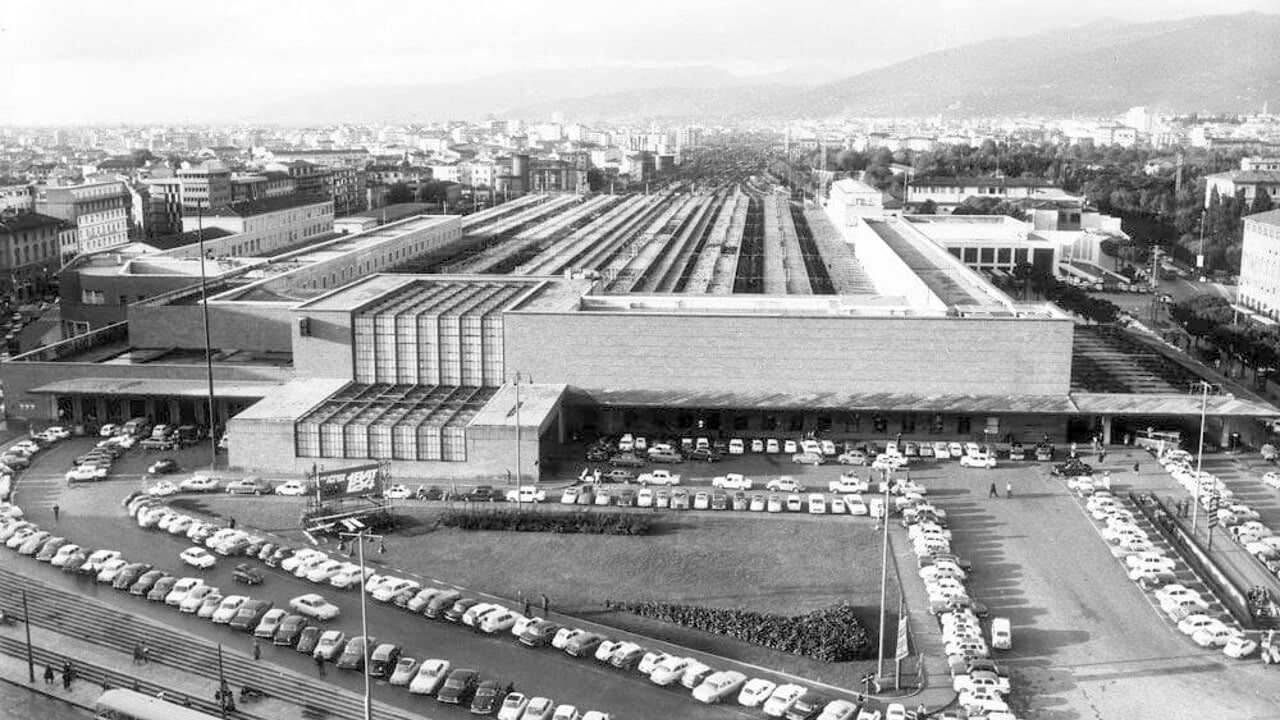
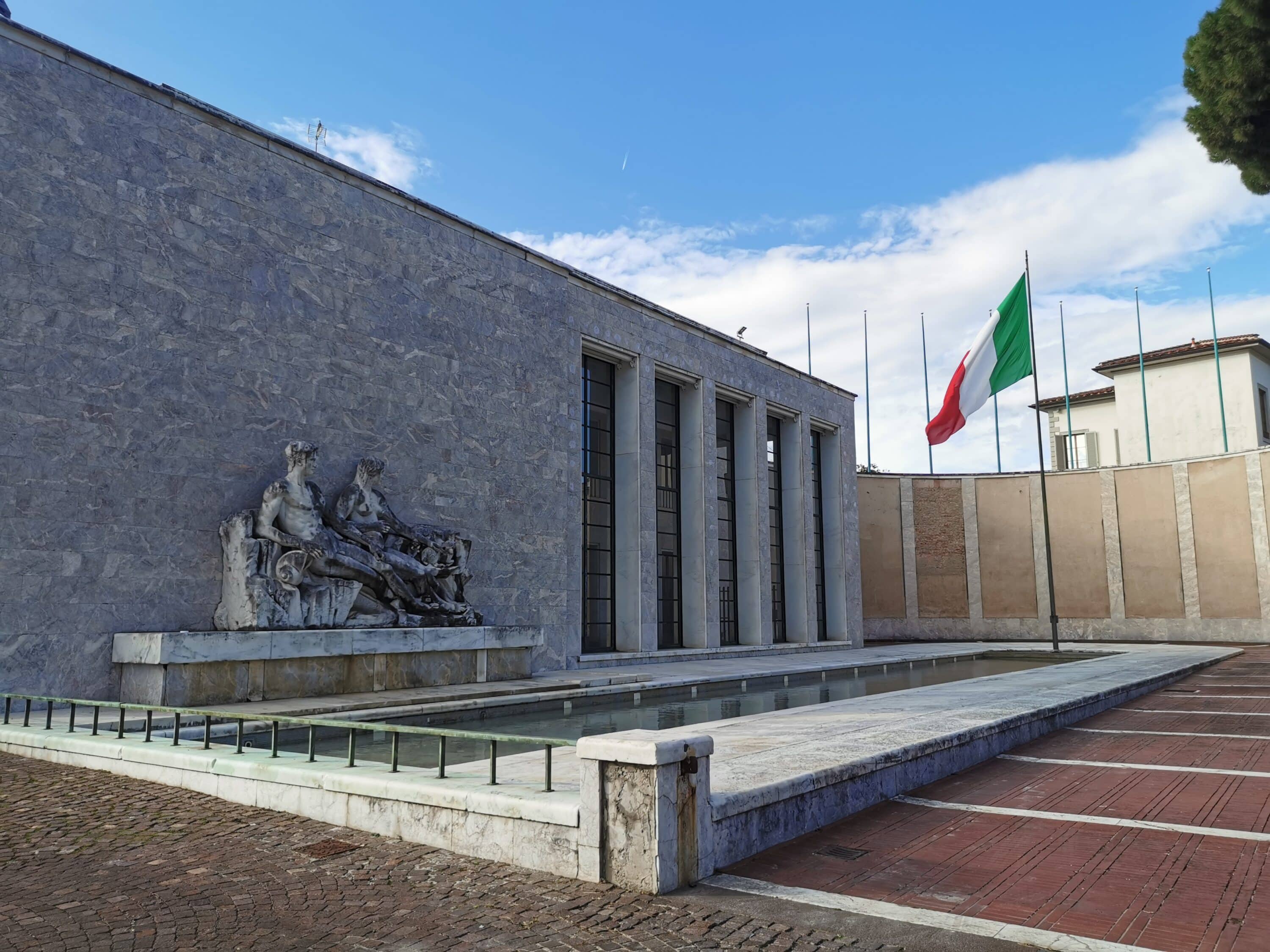
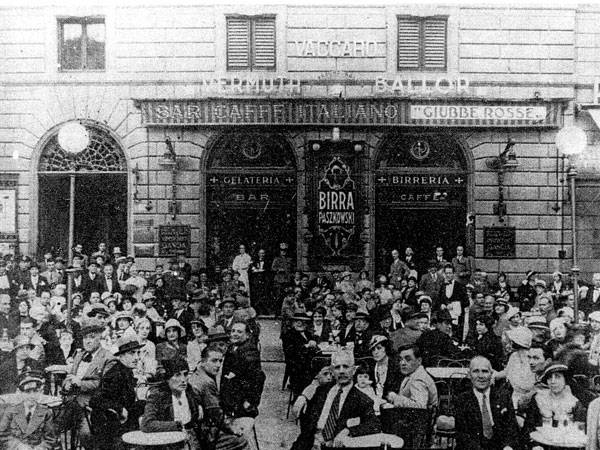
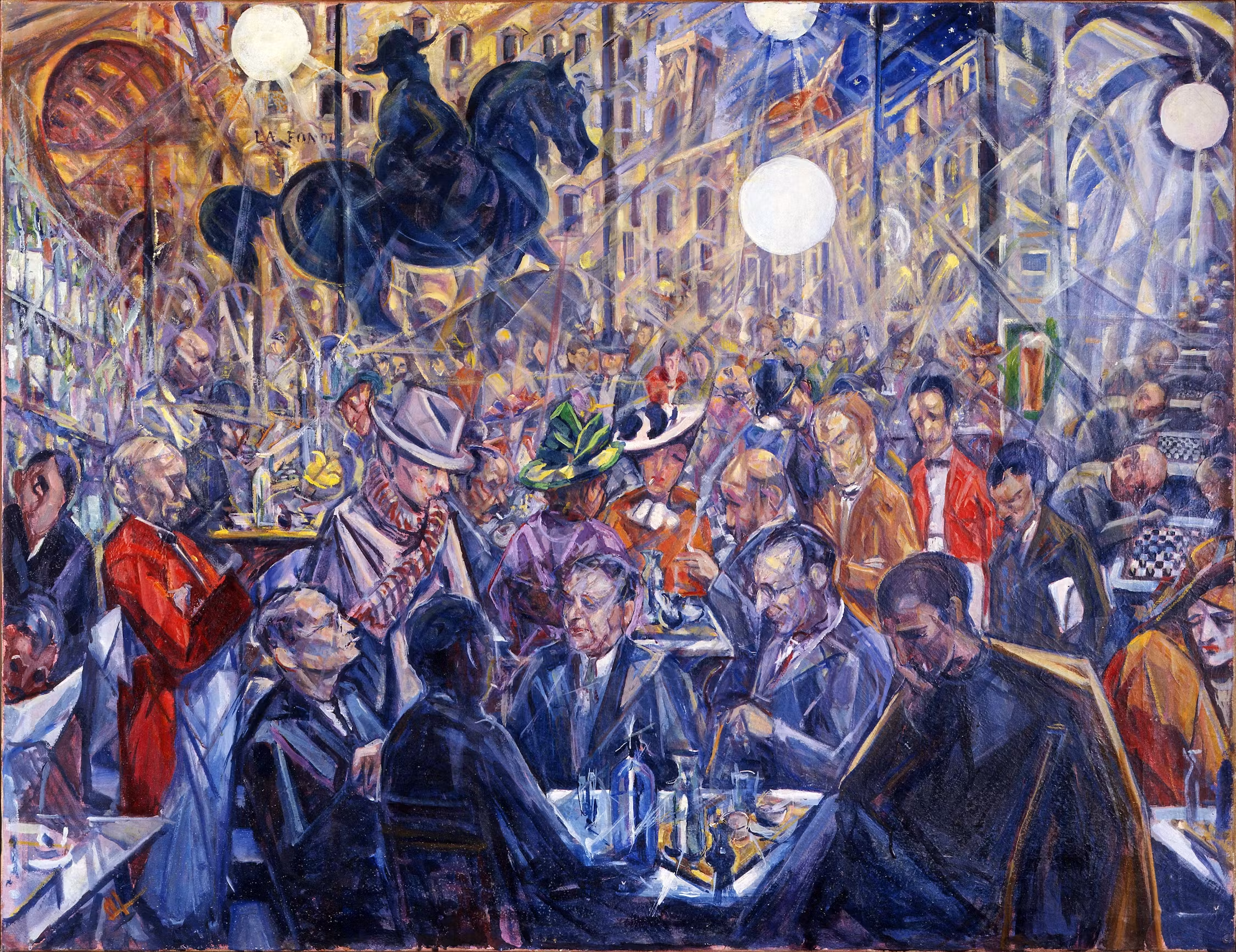
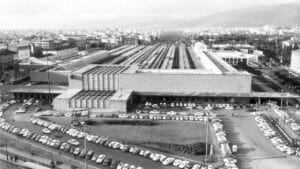
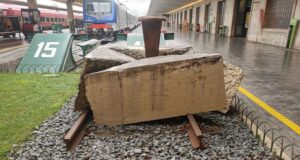
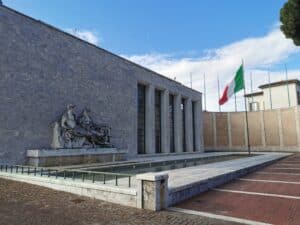
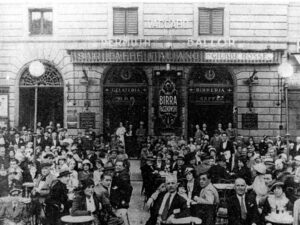
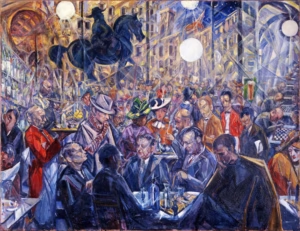
To understand 1944 we must start in the 1920s, when Fascism is born and takes root in Florence too. In March 1919 Marinetti’s Futurists help to found the Fasci di Combattimento alongside Mussolini, and in Florence the movement had already found a home in the magazine Lacerba and at the Giubbe Rosse café. Among the painters who embrace the regime is Ottone Rosai, a Florentine rooted in the working-class districts of the Oltrarno, who began in the avant-garde. Architecture, too, tells the story of those years: the Santa Maria Novella station, inaugurated in 1935 and personally approved by Mussolini, is one of the masterpieces of Italian Rationalism.
August 1944: The Night of the Bridges
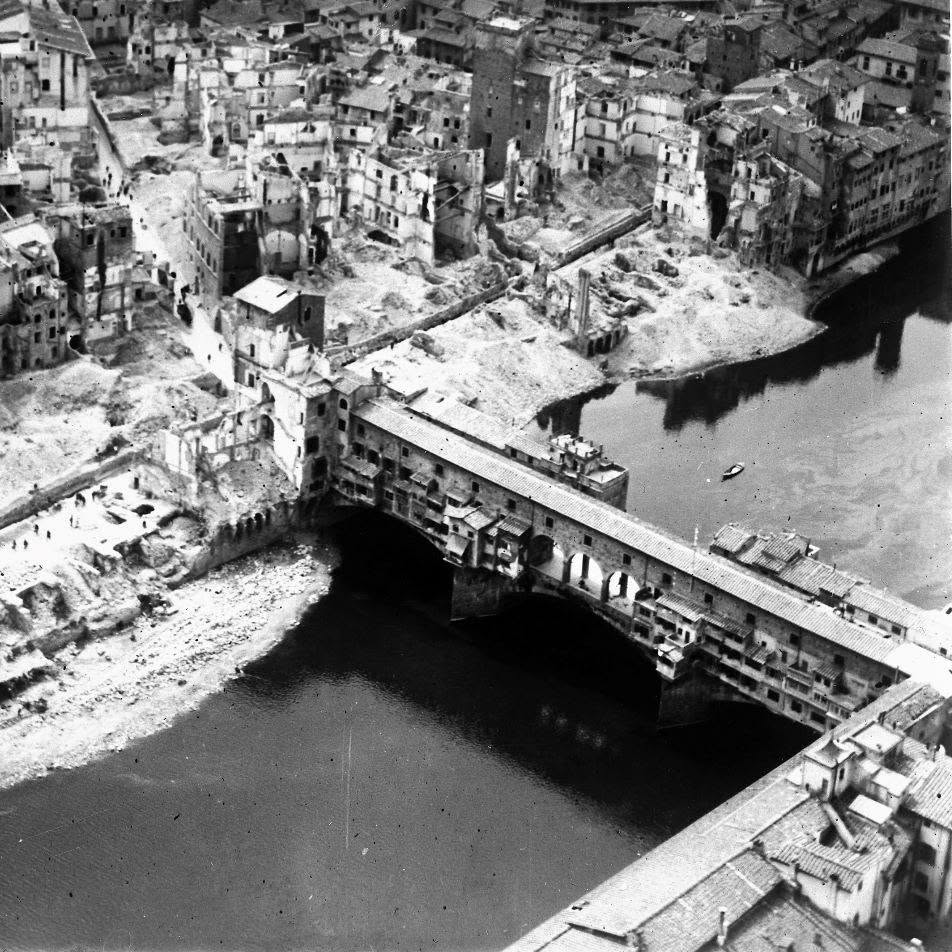
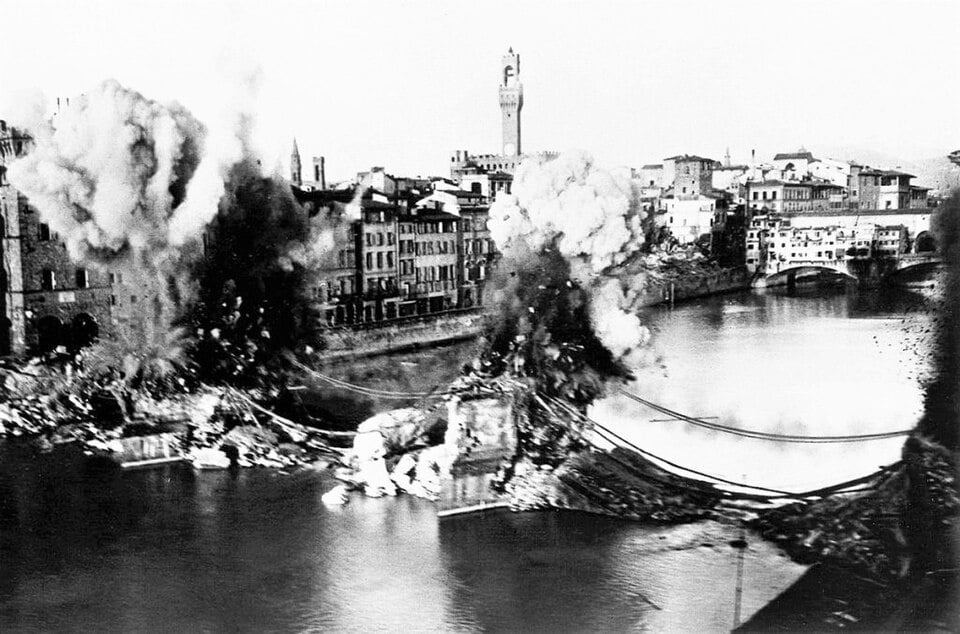
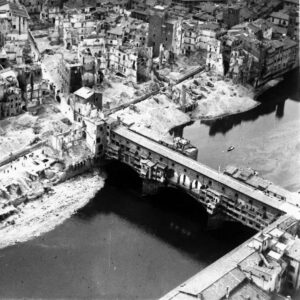
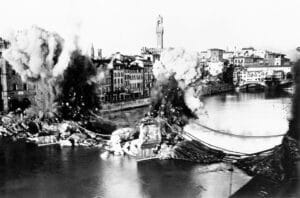
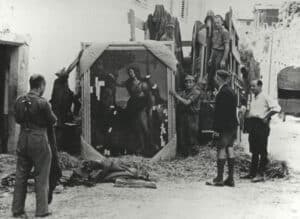
On the night of 3 to 4 August 1944, as the German army retreats, mines destroy every bridge over the Arno but one: the Ponte Vecchio. Why it was spared is still debated, between Hitler’s admiration for the bridge and other legends. The medieval districts at its two ends are mined as well, from the Mercato Nuovo to Piazza Pitti, to slow the Allied advance. Cardinal Elia Dalla Costa and the German consul had tried in vain to save at least the Ponte Santa Trinita. In those days thousands of displaced Florentines find refuge in Palazzo Pitti.
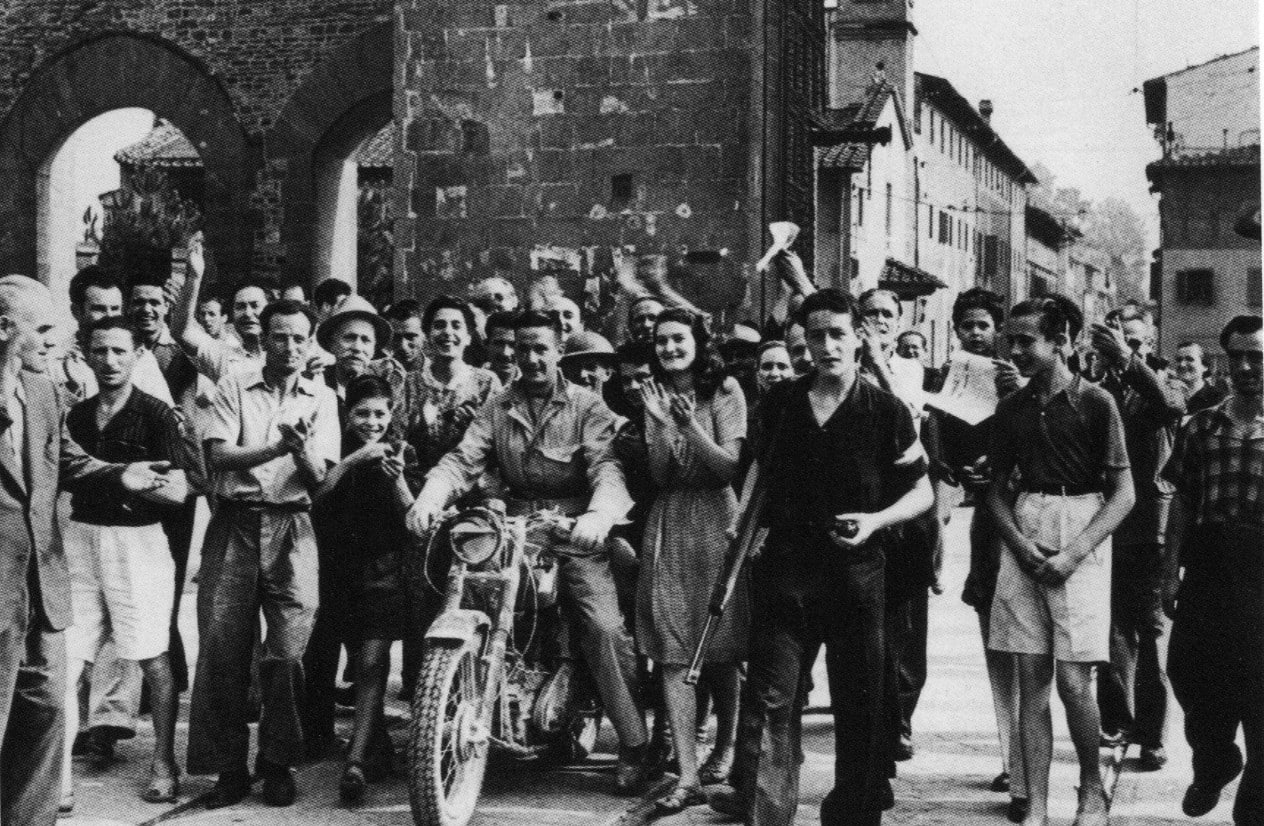
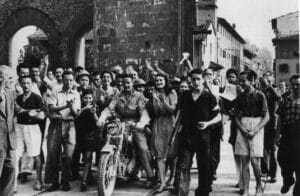
At dawn on 11 August the Martinella, the bell of the Arnolfo Tower in Palazzo Vecchio, sounds the signal for the uprising. The partisans, gathered in the Oltrarno, cross the river on rafts, because the bridges no longer exist, and the liberation begins of a city the river has split in two.
Rebuilding Florence: “As It Was, Where It Was”?
Immediately after the war the city is divided: should it be rebuilt as it was, or in a modern language? Only the Ponte Santa Trinita is rebuilt “as it was, where it was” (com’era e dov’era) and inaugurated in 1958, with stones recovered from the Arno and from the Boboli quarry. The statues of the Four Seasons are almost all fished out of the river; only the head of Spring is missing, found in 1961. Around the Ponte Vecchio, by contrast, buildings rise that allude to medieval forms: what looks ancient is often postwar.
The Florence Flood of 4 November 1966: The Mud Angels
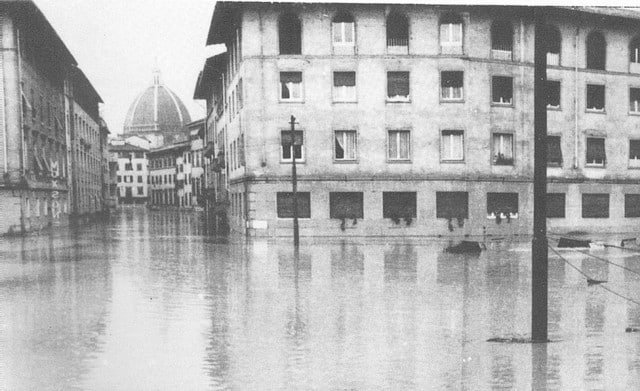
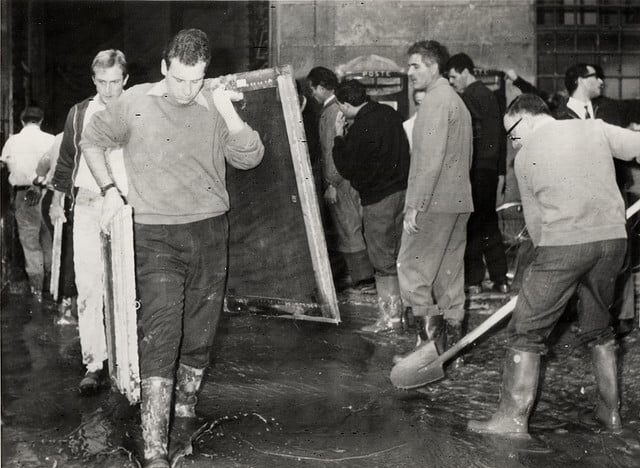
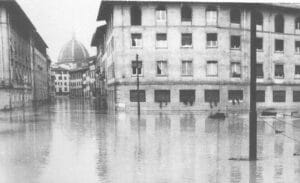
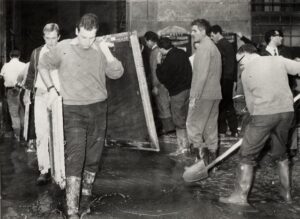
At dawn on 4 November 1966, after days of rain, the Arno overtops its embankments and floods the centre: at Santa Croce the water rises above six metres. Workshops, archives and works of art are swept away, and at the Biblioteca Nazionale Centrale over a million documents are damaged. Cimabue’s Crucifix loses more than half its painted surface and becomes the symbol of the wound inflicted on the city, and of its rebirth: it will return to Santa Croce in 1976, after eleven years of restoration. In the days that follow, young volunteers from all over the world, the “mud angels”, save books and paintings. Today the plaques in Via San Remigio show how high the water rose, in 1333 and in 1966.
If you want to understand Florence beyond the postcard, discovering how a wounded city chose to be reborn, this is the tour for you. Book your own Florence, unveiled.
What We’ll Do
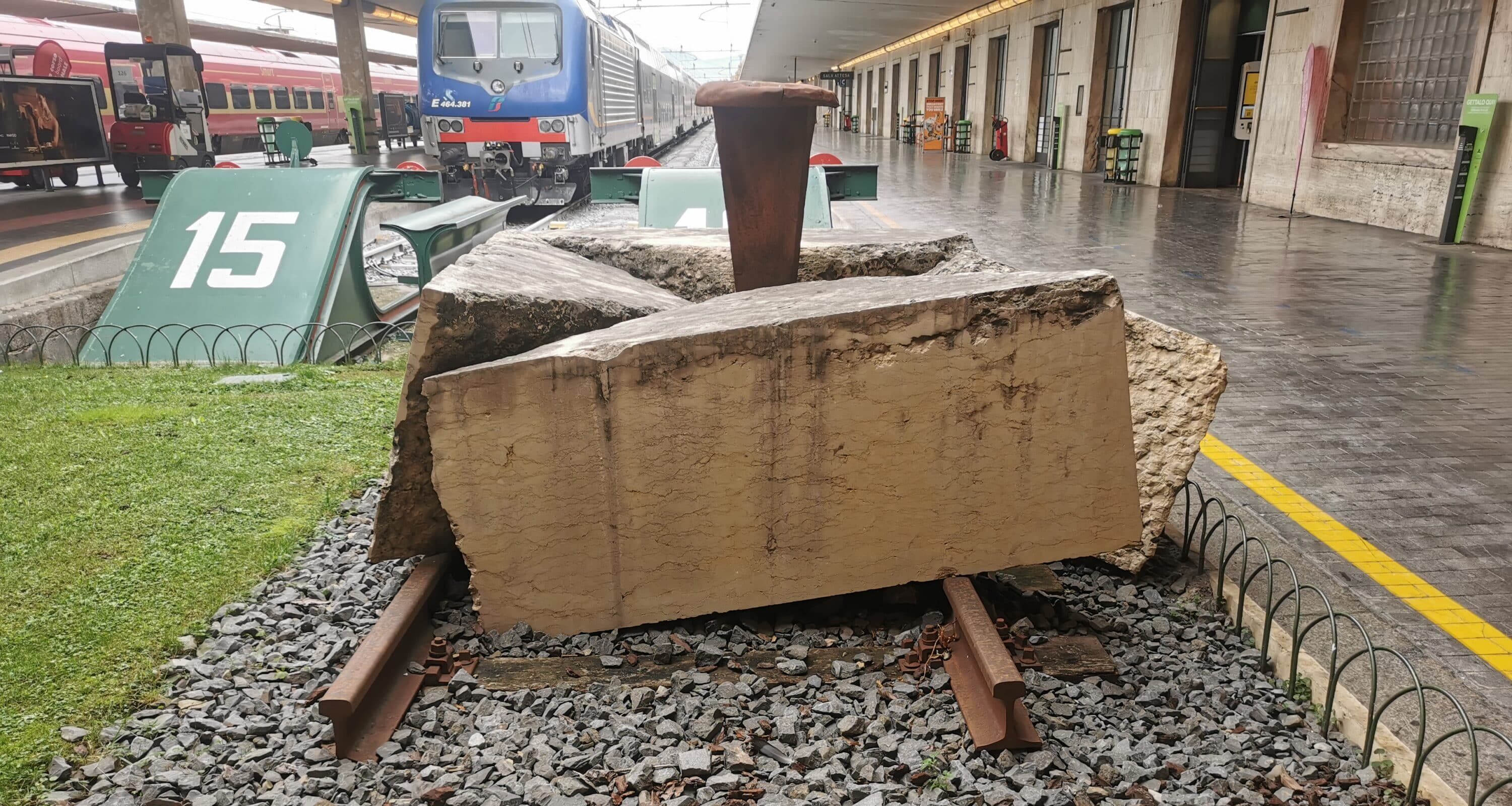
- We start at Santa Maria Novella station, one of the masterpieces of Italian Rationalism, built under Fascism and personally approved by Mussolini.
- We discover how Fascism, Marinetti’s Futurists and painters such as Rosai shaped Florence before the war.
- We follow the flood plaques to Santa Croce and learn the story of the mud angels.
- We walk along the Arno, from the Ponte Vecchio to the Ponte Santa Trinita, reading on the spot what was destroyed and what was rebuilt.
- We find out how the area around the Ponte Vecchio was rebuilt after 1944.
- We hear the story of the uprising of 11 August 1944 and of the Martinella of Palazzo Vecchio.
- We end in the Oltrarno, where we see Palazzo Pitti as a place of refuge for the displaced and experience the particular story of the Resistance in Florence, in the places where the partisans